Google AdSense Rejection: Is Low-Value Content Really the Problem? If you are a blogger who wants to monetize your website with Google AdSense but keeps receiving the “Low-value content” rejection message, I want you to look beyond the number of articles you have published.
I understand how frustrating this can be. You spend time researching topics, writing articles, designing your website and publishing content. You finally apply for AdSense, only to receive another rejection.
You make a few changes and apply again. Unfortunately, Google sends the same message.
At this point, you may start wondering what exactly Google wants from you.
Is your website too new? Do you need 100 articles? Should every article contain 2,000 words? Do you need more backlinks? Or is Google simply looking for something you have not added to your website?
From my experience working around SEO and website content, I believe many bloggers and seo professionals misunderstand the low-value content message.
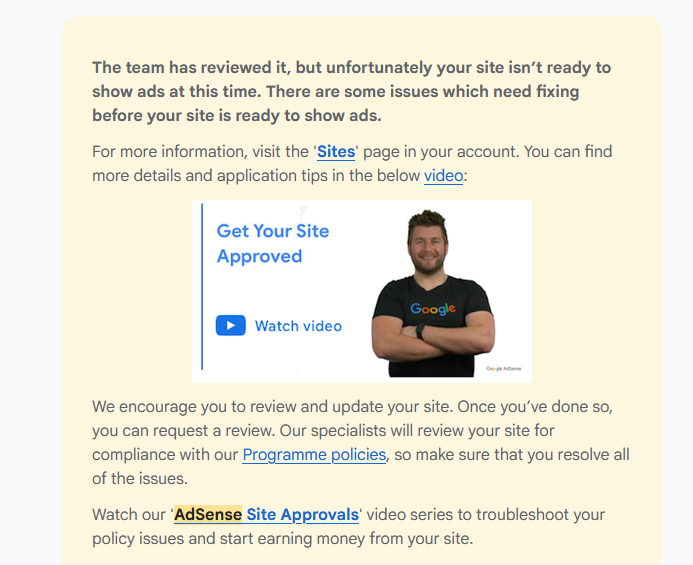
Google does not simply want you to publish more articles. It wants you to publish original content that people are actually searching for, content that answers their questions and gives them a reason to visit your website.
In this article, I will explain what I believe bloggers should focus on before applying for AdSense again.
Understand What Google Means by Low-Value Content
When Google rejects your website for low-value content, it does not necessarily mean your articles are grammatically poor or that you have published too few posts.
It can mean that Google does not see enough original, useful content on your website to justify showing advertisements there.
Think about it this way.
There are thousands of websites publishing articles about the same topics. If your website simply repeats information that visitors can find on many other websites, what reason would someone have to visit yours?
For example, imagine you publish an article titled:
“10 Best Ways to Make Money Online.”
You list the same methods that hundreds of other bloggers have already discussed. You do not provide personal experience, practical examples, original research or any additional information.
Even if the article contains 2,000 words, it may not offer much additional value.
Now imagine another blogger writes about the same topic but includes personal experience, realistic examples, mistakes to avoid, useful resources and practical steps.
Which article gives readers a stronger reason to stay?
That is the difference I want bloggers to understand.
Google’s own AdSense guidance says websites should provide unique, interesting and relevant content that offers a good user experience.
You can read Google’s official guide here: https://support.google.com/adsense/answer/7299563
Stop Publishing Articles Just to Increase Your Post Count
One mistake I see bloggers make is focusing too much on the number of published articles.
Some people believe they must publish 50, 80 or 100 articles before Google can approve their AdSense application.
But publishing 100 articles does not automatically make your website valuable.
You can have 100 articles and still struggle because:
- You are targeting keywords nobody searches for.
- Your articles do not answer the questions people ask.
- You are repeating information from other websites.
- Your content does not provide practical solutions.
- You publish several articles covering almost the same topic.
- Your website has no clear content direction.
Instead of asking yourself how many articles you have published, ask a more important question:
If someone visits my website today, will they find something useful that they cannot easily get from every other website?
That is the question I want you to answer honestly.
I would rather see a blogger publish 30 genuinely useful articles than publish 100 weak articles simply to increase the website’s post count.
Write About What People Are Actually Searching For
This is one of the most important things I want every blogger seeking AdSense approval to understand.
Google is a search engine. People visit it because they want answers, solutions, recommendations and information.
Your job as a blogger is to identify what people are searching for and create content that satisfies those needs.
For example, instead of writing a general article about travelling in Nigeria, you could target specific questions such as:
- How much is a bus ticket from Lagos to Abuja?
- Where is the ABC Transport terminal in Lagos?
- How much does it cost to travel from Enugu to Owerri?
- Which transport company travels from Lagos to Port Harcourt?
These are specific topics with clear search intent.
Someone searching for a bus ticket price wants useful pricing information. Someone searching for a terminal address wants to know where to find the terminal.
If your article answers those questions clearly, you give visitors a practical reason to use your website.
This is why I always encourage bloggers to carry out keyword research before writing.
You can use tools such as Google Keyword Planner, Google Search Console and other keyword research platforms to discover what people are searching for.
However, do not stop at finding a keyword. Understand the reason behind the search.
An article should answer the visitor’s question, not just repeat the keyword several times.
Match Your Content With Search Intent
Finding a keyword is only the beginning. You also need to understand what the person expects to see after searching for it.
This is called search intent.
For example, someone searching for “Google AdSense approval requirements” probably wants to understand what they need before applying.
If you write an article that only explains the history of Google AdSense without discussing approval requirements, you have missed the search intent.
Before writing any article, ask yourself:
- What exactly does the searcher want to know?
- What problem are they trying to solve?
- What information would make the article genuinely useful?
- Can I provide examples, steps, prices, comparisons or practical experience?
- Will the reader need to visit another website immediately after reading my article to find the answer I promised?
Your content should satisfy the searcher’s expectations.
Do not write an article simply because a keyword has high search volume. Write it because you can provide useful information about that topic.
For more insight into website rankings and content quality, you can also read this article:
Why Your Website Is Not Ranking on Google Despite Publishing 100 Articles
Create the Important Pages on Your Website
Before applying for Google AdSense, make sure your website looks complete and provides visitors with the basic information they need.
I consider these pages important:
- About Us: Explain what your website does, who manages it and what readers can expect.
- Contact Us: Give visitors a clear way to contact you.
- Privacy Policy: Explain how your website handles visitor information and cookies where applicable.
- Terms and Conditions: Set out the rules that apply to using your website.
- Disclaimer: Where relevant, explain the limitations of the information or advice you publish.
You should also make sure that your navigation menu works properly.
Visitors should not struggle to find your articles or move from one page to another.
However, I want to make something clear: creating these pages does not automatically qualify your website for AdSense approval. They help establish transparency and improve the user experience, but your actual content and compliance with Google’s policies still matter.
Build at Least One Article That Consistently Attracts Google Traffic
This is another important part of my approach.
I do not want you to focus only on publishing new articles. I also want you to identify content that can attract consistent visitors from Google.
Think about what happens when your website has an article that answers a question people search for every day.
That article can bring visitors even when you are not publishing anything new.
For example, a transport website could have an article about the current ticket prices from Lagos to Abuja. A technology website could have a detailed guide explaining how to solve a common phone problem.
If the article provides accurate and useful information, people may continue finding it through Google.
This is why I encourage bloggers to work towards getting consistent organic traffic before applying for AdSense.
As a practical target, you can aim to build towards 50–100 genuine daily visitors from Google Search.
I believe this is a useful milestone because it shows that your website is beginning to attract people who are actively searching for your content.
But please understand this correctly: Google does not publish 50–100 daily visitors as an official AdSense approval requirement. Reaching that number does not guarantee approval. A website with fewer visitors can still meet AdSense requirements, while a website with thousands of visitors can still be rejected for content or policy problems.
The important thing is to build real traffic from relevant searches instead of buying artificial visits or using traffic exchange platforms.
Use Google Search Console to Identify Your Best Articles
If you have already published several articles, I recommend connecting your website to Google Search Console.
This tool helps you understand how your website performs in Google Search.
You can use it to discover:
- Which articles are receiving impressions.
- Which keywords are bringing visitors.
- Which pages are getting clicks.
- Which articles appear in search results but receive few clicks.
- Whether Google has indexed your important pages.
- Which pages need improvement.
Do not ignore an article that is already receiving impressions.
For example, if an article receives 2,000 impressions but only 10 clicks, you may need to improve its title and meta description.
If an article gets impressions but appears very low in search results, you may need to improve its content, relevance and internal links.
Your goal should be to turn your existing content into useful pages that attract and satisfy visitors.
Do Not Depend on AI-Generated Articles Without Adding Your Own Value
AI writing tools can help bloggers research, organize ideas and prepare drafts. I do not believe using AI automatically makes an article worthless.
The real problem starts when bloggers publish large quantities of generic content without checking the information or adding anything useful.
For example, you can ask an AI tool to write about the best places to visit in Lagos. It may produce a well-structured article, but does it include current prices, accurate addresses, personal observations or useful details that help someone plan a visit?
If it simply repeats common information, you have not given readers a strong reason to choose your website.
Whenever you use AI to prepare an article, improve the draft with:
- Original research.
- Accurate and updated information.
- Practical examples.
- Your own analysis and experience.
- Relevant images, screenshots or illustrations.
- Useful comparisons and explanations.
- Links to reliable sources where necessary.
Do not publish an article just because it looks complete. Read it, verify it and make sure it genuinely helps someone.
Google’s guidance focuses on helpful, reliable, people-first content rather than content created mainly to manipulate search rankings.
You can read more here:
https://developers.google.com/search/docs/fundamentals/creating-helpful-content
Improve Your Existing Articles Before Publishing More
If Google has rejected your website several times, I would not advise you to keep publishing new articles without reviewing the ones already on your website.
Go through your existing posts and identify pages that offer little value.
For each article, ask:
- Does it answer the main question in the title?
- Is the information accurate?
- Does it contain original insights?
- Is the article easy to read?
- Does it contain unnecessary paragraphs?
- Are the images relevant?
- Does it link to other useful pages on my website?
- Would a visitor feel satisfied after reading it?
Update articles that need improvement.
Where two articles cover almost exactly the same topic, consider whether you should combine them into one stronger resource.
You should also remove or improve thin pages that do not provide meaningful information. Do not delete useful articles simply because they are not receiving traffic yet.
The aim is to make the entire website more useful, not just to increase the number of pages.
Build a Website That People Have a Reason to Visit
Let me explain the main point of this article.
If you want Google AdSense to approve your website, stop thinking only about the advertisements you want to display.
Think about the people who will visit your website.
What information are they looking for? What problem can you solve? Why should they read your article instead of another website’s article?
A website that consistently provides useful information has a stronger foundation for attracting an audience and building a loyal readership.
That is the direction I want bloggers to take.
My Practical AdSense Approval Checklist
Before submitting your website for another review, I recommend checking the following:
- My website has a clear topic or purpose.
- I publish original and useful articles.
- My articles answer real questions people search for.
- My content matches the search intent of visitors.
- My important pages are available.
- My navigation menu works properly.
- My website works well on mobile devices.
- My important pages are accessible to Google’s reviewers.
- I have checked my website for broken links and unfinished pages.
- My content and traffic sources comply with AdSense policies.
- I use Google Search Console to monitor my search performance.
- I have improved thin or repetitive articles.
- I am building genuine traffic instead of buying artificial visits.
Remember that this checklist is a practical preparation guide, not a guaranteed approval formula. Google reviews websites individually and may identify issues beyond the items listed here.
Final Thoughts: Is Low-Value Content Really the Problem?
Yes, low-value content can be the problem, but I do not want you to interpret the rejection message as a simple instruction to write more articles.
I want you to look at your website from the perspective of a visitor.
If someone lands on your website today, will they find original information? Will your articles answer their questions? Will they have a reason to read another page or return later?
That is where I would focus my attention.
Create the important pages. Publish original articles. Target keywords people are actually searching for. Match search intent. Improve your existing content and work towards consistent organic traffic.
My suggested target of 50–100 daily Google visitors is a useful milestone to work towards, not an official AdSense requirement.
Do not build a website just to display Google advertisements. Build a website that people genuinely want to visit.
That is the foundation I would work on before submitting another AdSense application.
Need Help Improving Your Website’s SEO?
At SmartSEO, we help website owners improve their search visibility through content strategy, keyword research, on-page SEO and quality link-building.
If you have published many articles but still struggle to attract organic traffic, you may need to review your SEO strategy before writing more content.
Explore our SEO services or learn how we helped achieve 300 organic clicks in just 24 hours.
You can also read our case study on how we ranked a Lagos-to-Abuja transport keyword from page 13 to page 1 on Google.
SmartSEO Helping websites attract the right traffic through better SEO.
Also Check
12 Best SEO Companies in Nigeria August 2026: Rated By Trusted Agencies
How Much Does SEO Cost in Nigeria: A Complete Pricing Guide for Businesses in 2026
Cheap SEO Service in Lagos: Get More Customers Without Spending a Fortune
5 Simple SEO Hacks to Get More Customers Without Spending Money on Ads2026 Local SEO Guide: The Exact Strategy Small Businesses Need to Dominate Google